
Parke County Blotter Coverage
Parke County publishes no multi-day arrest log. There is no 72-hour list, weekly roster, or paginated booking feed. What exists lives on the Parke County Sheriff's Office homepage, which posts selected dated releases in its news and RecentArrests areas. The office promises no fixed seven-day window. It offers no calendar filter, no archive depth, and no pledge that every arrest becomes a release. Items can linger, get replaced, or sit in a search engine long after leaving the homepage.
Reconstruction is the practical method. Work backward through whatever the official page still shows. Note the arrest date and the web publication date separately. For any date span the page cannot confirm, request the records directly. News stories add context later. They are not the county's custody ledger.
Read the Parke Police Blotter
Start with the official source and build a simple date ledger. This keeps the arrest, booking, release, and story dates from blurring together. Each date answers a different question. A person can also move from jail custody to release or transfer. An older narrative can stay online meanwhile.
- Review current sheriff release items and record the arrest date stated in each narrative.
- Note the named arresting agency. A town police department may arrest someone who is then accepted at Parke County Jail.
- Record charges as “reported charges,” not outcomes, and note whether a selected photo appears.
- Search Indiana MyCase for later public case activity, while recognizing that a filing can appear after the initial arrest.
- For missing days or older entries, ask the sheriff for a defined date range and the fields needed.
For immediate confirmation, use the Arrests Last 24 Hours method. The blotter approach is broader. It spans several days. It follows the record into archives and court instead of assuming a live daily feed. The official sheriff source is the first screen to consult. Use it when reconstructing the Parke County release sequence.

The image shows the format of the public release module itself. Names or pictures visible there never amount to a complete blotter.
Parke Arrest Log Fields
An official narrative often exposes fewer fields than the jail record behind it. Build a date-range request around what is missing. Indiana's public-log categories cover core arrest and confinement details. They support asking for those. The law does not force the sheriff to build a new online database.
| Field | How to read it across days |
|---|---|
| Full name | Check spelling and aliases against the jail or court record. |
| Arrest date and place | Do not substitute the story publication date. |
| Arresting agency | Distinguish sheriff, town police, state police, or another agency. |
| Reported charges | Intake charges can differ from filed charges and final disposition. |
| Booking number and time | Not consistently shown in public releases; request or confirm them. |
| Bond and custody status | A dated story can outlast county custody. Verify separately. |
| Photograph | Selected releases may have one, but Parke publishes no complete photo roster policy. |
Indiana Code 5-14-3-5 spells out public arrest and jail-log categories. These include name, age, address, and reason held. They also cover receipt time, bond, and discharge or transfer information. Request the maintained records with precise dates and names. If you know only the arresting agency, say so. The county can then route the request.
Parke Weekend Arrest Gaps
The sheriff publishes no weekend or holiday posting schedule. So there is no basis for claiming entries stop. Nor is there proof that entries arrive at a set hour or drop in a Monday batch. A wider date range still helps, since delayed releases may surface after the fact. Visibility alone cannot measure the true number of Parke County arrests.
For a long weekend, review public items one day before and after your span. Then request the actual arrest or daily bulletin record for the exact dates. A custody check answers whether one person is held right now. It does not recreate every arrest in the period.
Note: Count official records, not headlines. Do this before claiming any Parke County weekend or holiday arrest pattern.
News Is Not an Arrest Ledger
Parke County reporting runs on stories, not rosters. The Sentinel may cover sheriff activity or transport to the jail. It may also report an arraignment or a later case event. WTHI-TV's regional crime desk often publishes Parke and Rockville stories faster. Neither outlet keeps a complete Parke County booking blotter. Story dates reflect publication, not necessarily the arrest or intake date. The Parke County Sentinel news section works best as a secondary local source. Use it for reports and later developments.
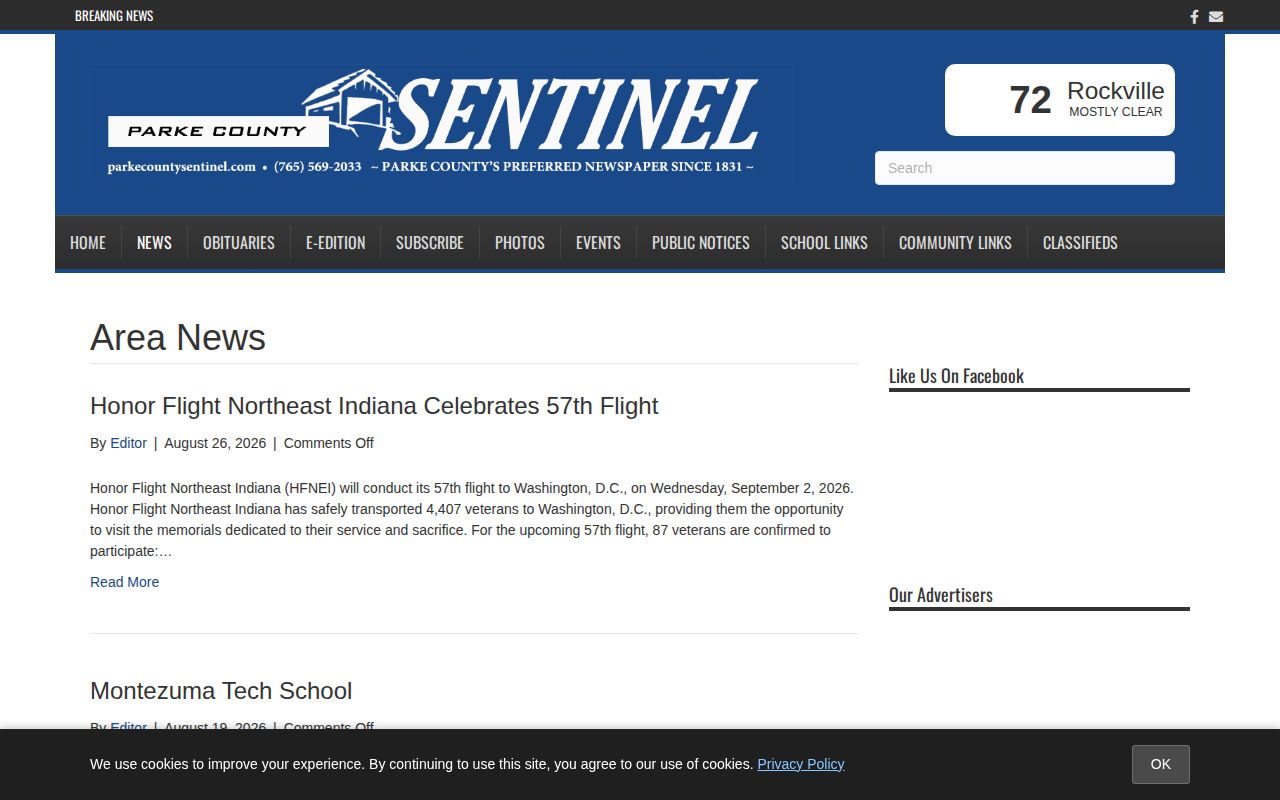
The image shows editorial coverage, not a sheriff roster or booking-photo field. The WTHI-TV crime page offers another secondary view of regional law-enforcement stories.
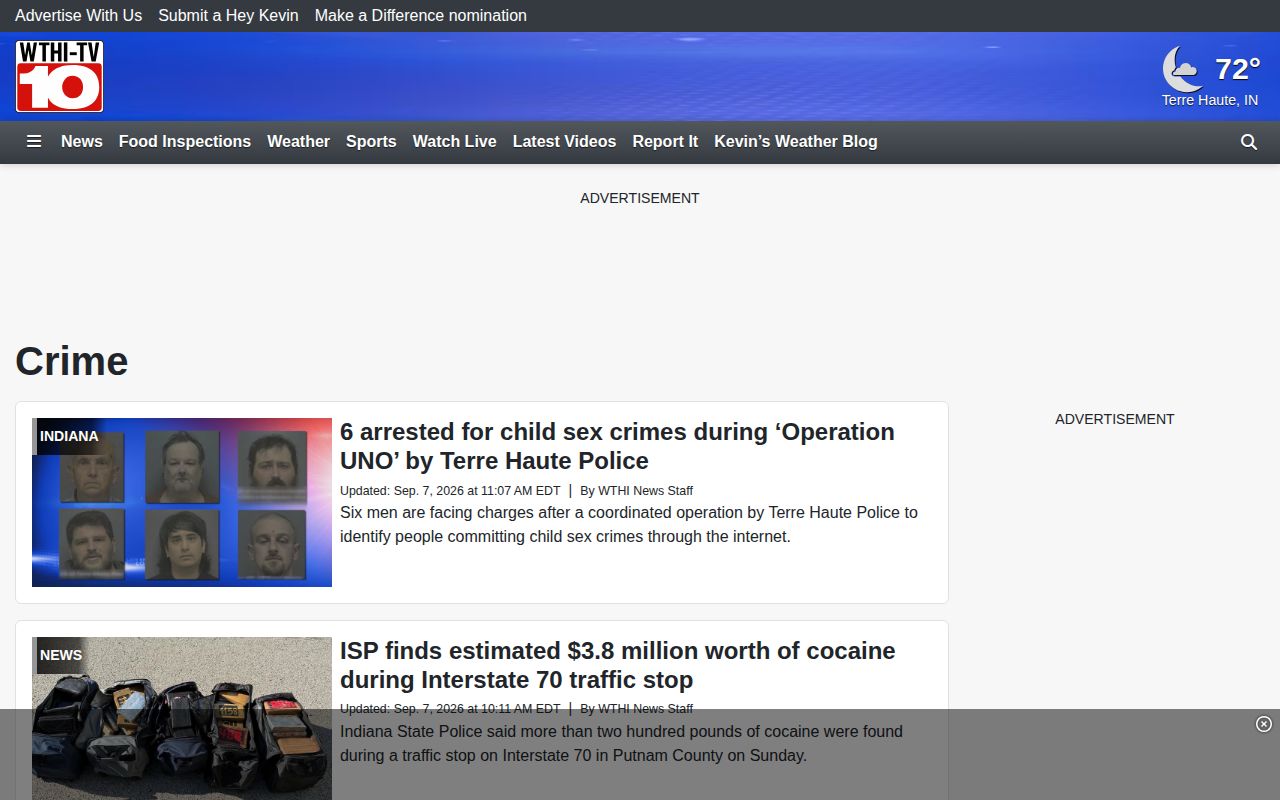
WTHI can add useful context about which agency handled a case and where it stands in court. Still, a story's publish time is not the arrest time. Treat the sheriff, the jail, MyCase, and the Clerk as the ground truth for any Parke County booking fact. Check news against those official records before you rely on it.
Unofficial Parke Arrest Archives
Unofficial republishers can look deeper than the county website. BustedNewspaper's Parke section carries pagination reaching older booking-style entries. That depth belongs to the publisher's own archive. It does not prove Parke County operates the feed, keeps the same pages, or confirms current custody.
A typical entry lists a name, physical descriptors, booking date and time, arresting agency, reported charges, jurisdiction, and bond when supplied. Those fields help pin down a spelling or date for an official request. They can also be stale, incomplete, or wrong. Treat BustedNewspaper's Parke page as a discovery aid only.
Confirm present custody through the jail or VINE. Check case outcomes on MyCase or with the Clerk. The same caution applies to any republished county page.
Parke Arrest Record Retention
What a county keeps and what the web shows are two different things. Indiana's county public-safety retention schedule spells out the difference. Daily bulletins fall under PSA 17-27. The schedule sends them to destruction after one year. Adult inmate custody files follow PSA 17-39. Those survive ten years past the end of incarceration. A custody file can hold booking sheets, arrest cards, intake and transfer notes, release forms, court material, and victim notification records.
Juvenile records run on their own clock. PSA 17-40 sets destruction at ten years after incarceration ends or seven years past the person's 18th birthday, whichever lands later. Access to juvenile material is limited as well. Nothing in the schedule promises that a booking photo stays online or moves to the State Archives.
Hunting an older Parke County arrest? Name the series you want. Give a date range, the people involved, and the fields you need. Ask plainly whether the record still exists under the approved schedule. For later IDOC custody, go through IDOC records channels. The State Archives handles historical state correctional records, not routine current Parke County Jail bookings.
Send local requests to the Parke County Sheriff's Office. Reach them at Jfrazier@parkecounty.in.gov, 765-569-5413, or 458 W. Strawberry Road, Rockville, IN 47872. State your beginning and ending dates. Ask for daily bulletin or arrest-log material the office still maintains. If one person is the focus, add the full name, likely agency, rough arrest date, and any Book In or cause number. Ask for electronic copies, and have the office state any lawful fee before work starts.
Indiana law sets response windows, not instant delivery. State guidance gives the office 24 hours to answer an in-person or phone request. Mailed, emailed, or faxed requests get seven calendar days. Those mark response deadlines only. Production of the actual Parke County records must follow within a reasonable time for the work involved.
MyCase is worth a look when a public criminal case was filed after an arrest. A sheriff narrative can disappear while a non-confidential court case stays open to view. A filing may also surface after the first news story breaks. Check the cause number, the filed counts, the orders, and the disposition side by side. The Clerk keeps the official case file. Juvenile, sealed, expunged, or confidential material may stay hidden from public access.
Public Record Search
Sponsored Results